





























AIInsiderUpdates
  • Home
  • AI News
    Global Regulatory Frameworks for AI: Progressing Towards Security, Ethics, Accountability, and Data Protection

    Global Regulatory Frameworks for AI: Progressing Towards Security, Ethics, Accountability, and Data Protection

    International Collaboration: A Key Driver for AI Technology Standards and Ecosystem Development

    International Collaboration: A Key Driver for AI Technology Standards and Ecosystem Development

    Industry-Leading AI Companies and Cloud Service Providers

    Industry-Leading AI Companies and Cloud Service Providers

    An Increasing Number of Enterprises Integrating AI into Core Strategy

    An Increasing Number of Enterprises Integrating AI into Core Strategy

    Large Model Providers and Enterprises in Speech & NLP Continue Expanding Application Scenarios

    Large Model Providers and Enterprises in Speech & NLP Continue Expanding Application Scenarios

    Breakthrough Advances in AI for Complex Perception and Reasoning Tasks

    Breakthrough Advances in AI for Complex Perception and Reasoning Tasks

  • Technology Trends
    AI Explainability and Ethics: Balancing Transparency, Accountability, and Trust in AI Systems

    AI Explainability and Ethics: Balancing Transparency, Accountability, and Trust in AI Systems

    Multimodal AI: Revolutionizing Data Integration and Understanding

    Multimodal AI: Revolutionizing Data Integration and Understanding

    Smart Manufacturing and Industrial AI

    Smart Manufacturing and Industrial AI

    Multilingual Understanding and Generation, Especially in Non-English Language Contexts: A Global Innovation Frontier

    Multilingual Understanding and Generation, Especially in Non-English Language Contexts: A Global Innovation Frontier

    AI Systems Are No Longer Limited to Single Inputs: The Rise of Multimodal AI

    AI Systems Are No Longer Limited to Single Inputs: The Rise of Multimodal AI

    Optimizing Transformer and Self-Attention Architectures to Enhance Model Expressiveness

    Optimizing Transformer and Self-Attention Architectures to Enhance Model Expressiveness

  • Interviews & Opinions
    Human-Machine Collaboration and Trend Prediction: The Future of Work and Decision-Making

    Human-Machine Collaboration and Trend Prediction: The Future of Work and Decision-Making

    Despite AI Automation Enhancements, Human Contribution Remains Unmatched in Data Creation and Cultural Context Understanding

    Despite AI Automation Enhancements, Human Contribution Remains Unmatched in Data Creation and Cultural Context Understanding

    Investment Bubbles and Risk Management: Diverging Perspectives

    Investment Bubbles and Risk Management: Diverging Perspectives

    CEO Perspectives on AI Data Contribution and the Role of Humans

    CEO Perspectives on AI Data Contribution and the Role of Humans

    Differences Between Academic and Public Perspectives on AI: Bridging the Gap

    Differences Between Academic and Public Perspectives on AI: Bridging the Gap

    AI Technology is No Longer Just a Tool: It Has Become a Core Component of Enterprise Competitiveness

    AI Technology is No Longer Just a Tool: It Has Become a Core Component of Enterprise Competitiveness

  • Case Studies
    Multidimensional Applications of AI in the Digital Transformation of Manufacturing

    Multidimensional Applications of AI in the Digital Transformation of Manufacturing

    AI Customer Service Bots and Smart Advisors: Helping Banks Reduce Human Customer Support Costs While Enhancing Response Efficiency, User Engagement, and Satisfaction

    AI Customer Service Bots and Smart Advisors: Helping Banks Reduce Human Customer Support Costs While Enhancing Response Efficiency, User Engagement, and Satisfaction

    Personalized Recommendation and Inventory Optimization

    Personalized Recommendation and Inventory Optimization

    How Retailers Use AI Models to Predict Sales Trends and Optimize Inventory Levels

    How Retailers Use AI Models to Predict Sales Trends and Optimize Inventory Levels

    AI Not Only Enhances Diagnostic Capabilities but Also Significantly Improves Backend Healthcare Services

    AI Not Only Enhances Diagnostic Capabilities but Also Significantly Improves Backend Healthcare Services

    AI in Manufacturing: Achieving Significant Cost Savings and Efficiency Improvements

    AI in Manufacturing: Achieving Significant Cost Savings and Efficiency Improvements

  • Tools & Resources
    Real-World Testing and Efficiency Evaluation of Emerging Technological Trends

    Real-World Testing and Efficiency Evaluation of Emerging Technological Trends

    Auxiliary AI Toolset: Enhancing Productivity, Innovation, and Problem Solving Across Industries

    Auxiliary AI Toolset: Enhancing Productivity, Innovation, and Problem Solving Across Industries

    Dataset Preprocessing and Labeling Strategies: A Resource Guide

    Dataset Preprocessing and Labeling Strategies: A Resource Guide

    Recommended Open Source Model Trade-Off Strategies

    Recommended Open Source Model Trade-Off Strategies

    Practical Roadmap: End-to-End Experience from Model Training to Deployment

    Practical Roadmap: End-to-End Experience from Model Training to Deployment

    Scalability and Performance Optimization: Insights and Best Practices

    Scalability and Performance Optimization: Insights and Best Practices

AIInsiderUpdates
  • Home
  • AI News
    Global Regulatory Frameworks for AI: Progressing Towards Security, Ethics, Accountability, and Data Protection

    Global Regulatory Frameworks for AI: Progressing Towards Security, Ethics, Accountability, and Data Protection

    International Collaboration: A Key Driver for AI Technology Standards and Ecosystem Development

    International Collaboration: A Key Driver for AI Technology Standards and Ecosystem Development

    Industry-Leading AI Companies and Cloud Service Providers

    Industry-Leading AI Companies and Cloud Service Providers

    An Increasing Number of Enterprises Integrating AI into Core Strategy

    An Increasing Number of Enterprises Integrating AI into Core Strategy

    Large Model Providers and Enterprises in Speech & NLP Continue Expanding Application Scenarios

    Large Model Providers and Enterprises in Speech & NLP Continue Expanding Application Scenarios

    Breakthrough Advances in AI for Complex Perception and Reasoning Tasks

    Breakthrough Advances in AI for Complex Perception and Reasoning Tasks

  • Technology Trends
    AI Explainability and Ethics: Balancing Transparency, Accountability, and Trust in AI Systems

    AI Explainability and Ethics: Balancing Transparency, Accountability, and Trust in AI Systems

    Multimodal AI: Revolutionizing Data Integration and Understanding

    Multimodal AI: Revolutionizing Data Integration and Understanding

    Smart Manufacturing and Industrial AI

    Smart Manufacturing and Industrial AI

    Multilingual Understanding and Generation, Especially in Non-English Language Contexts: A Global Innovation Frontier

    Multilingual Understanding and Generation, Especially in Non-English Language Contexts: A Global Innovation Frontier

    AI Systems Are No Longer Limited to Single Inputs: The Rise of Multimodal AI

    AI Systems Are No Longer Limited to Single Inputs: The Rise of Multimodal AI

    Optimizing Transformer and Self-Attention Architectures to Enhance Model Expressiveness

    Optimizing Transformer and Self-Attention Architectures to Enhance Model Expressiveness

  • Interviews & Opinions
    Human-Machine Collaboration and Trend Prediction: The Future of Work and Decision-Making

    Human-Machine Collaboration and Trend Prediction: The Future of Work and Decision-Making

    Despite AI Automation Enhancements, Human Contribution Remains Unmatched in Data Creation and Cultural Context Understanding

    Despite AI Automation Enhancements, Human Contribution Remains Unmatched in Data Creation and Cultural Context Understanding

    Investment Bubbles and Risk Management: Diverging Perspectives

    Investment Bubbles and Risk Management: Diverging Perspectives

    CEO Perspectives on AI Data Contribution and the Role of Humans

    CEO Perspectives on AI Data Contribution and the Role of Humans

    Differences Between Academic and Public Perspectives on AI: Bridging the Gap

    Differences Between Academic and Public Perspectives on AI: Bridging the Gap

    AI Technology is No Longer Just a Tool: It Has Become a Core Component of Enterprise Competitiveness

    AI Technology is No Longer Just a Tool: It Has Become a Core Component of Enterprise Competitiveness

  • Case Studies
    Multidimensional Applications of AI in the Digital Transformation of Manufacturing

    Multidimensional Applications of AI in the Digital Transformation of Manufacturing

    AI Customer Service Bots and Smart Advisors: Helping Banks Reduce Human Customer Support Costs While Enhancing Response Efficiency, User Engagement, and Satisfaction

    AI Customer Service Bots and Smart Advisors: Helping Banks Reduce Human Customer Support Costs While Enhancing Response Efficiency, User Engagement, and Satisfaction

    Personalized Recommendation and Inventory Optimization

    Personalized Recommendation and Inventory Optimization

    How Retailers Use AI Models to Predict Sales Trends and Optimize Inventory Levels

    How Retailers Use AI Models to Predict Sales Trends and Optimize Inventory Levels

    AI Not Only Enhances Diagnostic Capabilities but Also Significantly Improves Backend Healthcare Services

    AI Not Only Enhances Diagnostic Capabilities but Also Significantly Improves Backend Healthcare Services

    AI in Manufacturing: Achieving Significant Cost Savings and Efficiency Improvements

    AI in Manufacturing: Achieving Significant Cost Savings and Efficiency Improvements

  • Tools & Resources
    Real-World Testing and Efficiency Evaluation of Emerging Technological Trends

    Real-World Testing and Efficiency Evaluation of Emerging Technological Trends

    Auxiliary AI Toolset: Enhancing Productivity, Innovation, and Problem Solving Across Industries

    Auxiliary AI Toolset: Enhancing Productivity, Innovation, and Problem Solving Across Industries

    Dataset Preprocessing and Labeling Strategies: A Resource Guide

    Dataset Preprocessing and Labeling Strategies: A Resource Guide

    Recommended Open Source Model Trade-Off Strategies

    Recommended Open Source Model Trade-Off Strategies

    Practical Roadmap: End-to-End Experience from Model Training to Deployment

    Practical Roadmap: End-to-End Experience from Model Training to Deployment

    Scalability and Performance Optimization: Insights and Best Practices

    Scalability and Performance Optimization: Insights and Best Practices

AIInsiderUpdates
No Result
View All Result

Are We on the Verge of AI Becoming Truly “Smart”?

February 19, 2025
Are We on the Verge of AI Becoming Truly “Smart”?

Overview of the Latest Developments in Machine Learning

Artificial Intelligence (AI) has come a long way since its inception, and machine learning (ML) is at the forefront of this progress. Machine learning, a subset of AI, involves algorithms that allow computers to learn patterns from data and make decisions or predictions based on that data, without being explicitly programmed. While AI and ML have been around for decades, recent advancements have propelled the field into new territories, leading many to wonder whether we are on the verge of AI becoming truly “smart.”

In recent years, machine learning models, especially deep learning algorithms, have achieved impressive feats in areas that were once thought to be the exclusive domain of humans. The development of neural networks, particularly deep neural networks, has significantly improved the capabilities of AI systems in tasks such as image recognition, speech recognition, language translation, and even playing complex games like Go and chess.

A key development that has accelerated machine learning is the use of large-scale datasets and computational power. Modern machine learning models are trained on massive datasets containing billions of data points, which allow them to learn with greater accuracy and generalize better to new, unseen data. Deep learning models, which consist of multiple layers of neural networks, enable machines to process data in increasingly complex ways, mimicking how the human brain processes information.

One of the most notable breakthroughs in recent years has been the development of transformer-based models like GPT-3 (Generative Pretrained Transformer 3) and BERT (Bidirectional Encoder Representations from Transformers), which have revolutionized the field of Natural Language Processing (NLP). These models are capable of generating human-like text, answering questions, translating languages, and even creating content in a way that closely mimics human communication. This has raised questions about how “smart” AI can truly become and whether it is reaching the threshold of human-level intelligence.

Additionally, reinforcement learning (RL) has seen remarkable advancements, particularly with models like AlphaGo and AlphaZero developed by DeepMind. Reinforcement learning enables machines to learn by interacting with their environment and receiving feedback on their actions, ultimately improving their performance over time. These systems have demonstrated the ability to excel in complex tasks, such as playing strategy games at a superhuman level, which further fuels the belief that AI could become “smart” in the way we understand human intelligence.

Challenges and Breakthroughs in Achieving Human-Like Intelligence

Despite the remarkable advancements in machine learning, achieving true human-like intelligence remains a significant challenge. While AI has made impressive strides in specific tasks, it still lacks the generalization, adaptability, and emotional depth that define human intelligence. There are several key challenges that need to be addressed before AI can reach human-level or superintelligent capabilities.

  1. Generalization and Transfer Learning

One of the major challenges in machine learning is the ability to generalize knowledge across different domains. While AI systems can excel in narrow, well-defined tasks, they struggle to apply what they’ve learned in one context to new, unfamiliar situations. Humans, on the other hand, can easily transfer knowledge from one domain to another. For instance, a person who learns to ride a bike can easily adapt that knowledge to other forms of physical activity, such as skateboarding or skiing. AI systems, in contrast, are typically trained to perform a specific task and lack the ability to transfer that knowledge to new tasks without extensive retraining.

Researchers are exploring techniques like transfer learning, where a model trained on one task is adapted to perform a different but related task. While this is a step in the right direction, achieving true generalization—the ability to learn and adapt across diverse situations as humans do—remains a significant hurdle.

  1. Contextual Understanding and Common Sense Reasoning

Another critical area in which AI still falls short is understanding context and common sense reasoning. While machine learning models can be highly effective at recognizing patterns in data, they often fail to grasp the broader context or apply common sense to situations. For example, AI systems may struggle with tasks that require understanding of social norms, emotions, or the implicit knowledge that humans take for granted.

In many cases, AI systems lack the depth of understanding that comes from real-world experience and contextual learning. Humans are able to make inferences and draw conclusions based on a vast array of contextual clues and life experiences. AI, on the other hand, often relies solely on the data it has been trained on, making it susceptible to errors when faced with ambiguous or unfamiliar situations. Improving AI’s ability to reason about the world, understand causality, and apply common sense remains a critical challenge in the pursuit of human-like intelligence.

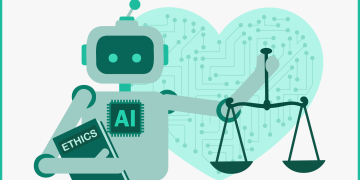
  1. Ethics and Bias in Machine Learning

Another pressing challenge is the ethical implications of AI and the potential for biases to emerge in machine learning systems. AI models learn from historical data, and if that data is biased or incomplete, the models can replicate and even amplify those biases. This is particularly concerning in areas like hiring, law enforcement, and healthcare, where biased AI systems could perpetuate inequality and discrimination.

Moreover, as AI systems become more sophisticated, they may be capable of making decisions that affect people’s lives in profound ways. This raises ethical questions about accountability, transparency, and control. Who is responsible when an AI system makes a harmful decision, and how can we ensure that AI systems align with human values and ethics?

Researchers and policymakers are actively working to address these issues by developing fairness-aware algorithms, promoting transparency in AI decision-making, and creating guidelines for responsible AI development. However, achieving unbiased, ethical AI that can be trusted to make important decisions remains a significant challenge.

  1. Emotional Intelligence and Empathy

Humans possess emotional intelligence (EQ), which allows us to navigate social interactions, understand and respond to emotions, and build relationships. Emotional intelligence plays a crucial role in decision-making, problem-solving, and communication. While AI systems have made impressive advancements in processing language and generating responses, they still struggle to understand and respond to human emotions in meaningful ways.

For AI to become truly “smart” in a human-like sense, it will need to develop emotional intelligence. This means not only recognizing emotions in human speech or behavior but also responding empathetically and appropriately. While AI has made progress in recognizing emotions through sentiment analysis and facial recognition, true empathy—understanding and sharing the feelings of others—is a far more complex challenge. Some researchers are exploring ways to integrate emotional intelligence into AI systems, but it is unclear when—or if—AI will be able to achieve true emotional depth.

  1. Computational Limitations and Energy Consumption

The computational power required to train and run machine learning models, particularly deep learning algorithms, is enormous. Training state-of-the-art models like GPT-3 requires vast amounts of computational resources and energy, which can be costly and environmentally taxing. As AI systems grow more complex, the demand for computational power will only increase, raising concerns about the sustainability of current AI research and applications.

Researchers are working on optimizing algorithms to be more efficient, but the trade-off between performance and resource consumption remains an ongoing challenge. Furthermore, the development of hardware that can support increasingly sophisticated AI models will be crucial to advancing the field in a sustainable way.

Conclusion

While AI has made impressive strides in recent years, we are still far from achieving true human-like intelligence. Machine learning has revolutionized the way we solve problems and automate tasks, but AI still faces significant challenges in areas like generalization, common sense reasoning, emotional intelligence, and ethical decision-making. These hurdles must be overcome before we can truly say that AI is “smart” in the way humans are.

Despite these challenges, the progress made in machine learning and AI is undeniable. Breakthroughs like deep learning, reinforcement learning, and NLP have brought us closer to creating systems that can think and act in ways that resemble human intelligence. As research continues, it is likely that we will see more advancements that bridge the gap between narrow AI and artificial general intelligence (AGI), leading us toward smarter, more capable systems.

Ultimately, whether AI becomes truly “smart” will depend on the continued collaboration between researchers, engineers, and ethicists. Achieving human-like intelligence is not just a technical challenge—it also involves ensuring that AI aligns with human values and serves the greater good of society.


Tags: AI developmentmachine learningTechnology Trends
ShareTweetShare

Related Posts

AI Explainability and Ethics: Balancing Transparency, Accountability, and Trust in AI Systems
Technology Trends

AI Explainability and Ethics: Balancing Transparency, Accountability, and Trust in AI Systems

January 21, 2026
Global Regulatory Frameworks for AI: Progressing Towards Security, Ethics, Accountability, and Data Protection
AI News

Global Regulatory Frameworks for AI: Progressing Towards Security, Ethics, Accountability, and Data Protection

January 21, 2026
Multimodal AI: Revolutionizing Data Integration and Understanding
Technology Trends

Multimodal AI: Revolutionizing Data Integration and Understanding

January 20, 2026
International Collaboration: A Key Driver for AI Technology Standards and Ecosystem Development
AI News

International Collaboration: A Key Driver for AI Technology Standards and Ecosystem Development

January 20, 2026
Smart Manufacturing and Industrial AI
Technology Trends

Smart Manufacturing and Industrial AI

January 19, 2026
Industry-Leading AI Companies and Cloud Service Providers
AI News

Industry-Leading AI Companies and Cloud Service Providers

January 19, 2026
Leave Comment
  • Trending
  • Comments
  • Latest
How Artificial Intelligence is Achieving Revolutionary Breakthroughs in the Healthcare Industry: What Success Stories Teach Us

How Artificial Intelligence is Achieving Revolutionary Breakthroughs in the Healthcare Industry: What Success Stories Teach Us

July 26, 2025
AI in the Financial Sector: Which Innovative Strategies Are Driving Digital Transformation?

AI in the Financial Sector: Which Innovative Strategies Are Driving Digital Transformation?

July 26, 2025
From Beginner to Expert: Which AI Platforms Are Best for Beginners? Experts’ Take on Learning Curves and Practical Applications

From Beginner to Expert: Which AI Platforms Are Best for Beginners? Experts’ Take on Learning Curves and Practical Applications

July 23, 2025
How to Find Truly Useful AI Resources Among the Crowd? Experts Share How to Select Efficient and Innovative Tools!

How to Find Truly Useful AI Resources Among the Crowd? Experts Share How to Select Efficient and Innovative Tools!

July 23, 2025
How Artificial Intelligence Enhances Diagnostic Accuracy and Transforms Treatment Methods in Healthcare

How Artificial Intelligence Enhances Diagnostic Accuracy and Transforms Treatment Methods in Healthcare

How AI Enhances Customer Experience and Drives Sales Growth in Retail

How AI Enhances Customer Experience and Drives Sales Growth in Retail

How Artificial Intelligence Enables Precise Risk Assessment and Decision-Making

How Artificial Intelligence Enables Precise Risk Assessment and Decision-Making

How AI is Driving the Revolution in Smart Manufacturing and Production Efficiency

How AI is Driving the Revolution in Smart Manufacturing and Production Efficiency

Real-World Testing and Efficiency Evaluation of Emerging Technological Trends

Real-World Testing and Efficiency Evaluation of Emerging Technological Trends

January 21, 2026
Multidimensional Applications of AI in the Digital Transformation of Manufacturing

Multidimensional Applications of AI in the Digital Transformation of Manufacturing

January 21, 2026
Human-Machine Collaboration and Trend Prediction: The Future of Work and Decision-Making

Human-Machine Collaboration and Trend Prediction: The Future of Work and Decision-Making

January 21, 2026
AI Explainability and Ethics: Balancing Transparency, Accountability, and Trust in AI Systems

AI Explainability and Ethics: Balancing Transparency, Accountability, and Trust in AI Systems

January 21, 2026
AIInsiderUpdates

Our platform is dedicated to delivering comprehensive coverage of AI developments, featuring news, case studies, expert interviews, and valuable resources for professionals and enthusiasts alike.

© 2025 aiinsiderupdates.com. contacts:[email protected]

No Result
View All Result
  • Home
  • AI News
  • Technology Trends
  • Interviews & Opinions
  • Case Studies
  • Tools & Resources

© 2025 aiinsiderupdates.com. contacts:[email protected]

Welcome Back!

Login to your account below

Forgotten Password?

Retrieve your password

Please enter your username or email address to reset your password.

Log In